Gothic Modern Exhibition at Ateneum – December 2024
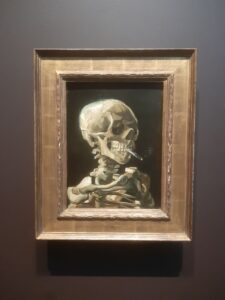
The saying mortui vivos docent—“the dead teach the living”—is well known to medical students from their anatomy studies. Visitors to an art exhibition, however, need not step into a dissection room or handle a scalpel, despite the growing trend of incorporating workshops into modern exhibitions. This particular show, which opened at the start of October, has received international attention, and young people have been especially drawn to its macabre imagery. A particular favorite is Vincent van Gogh’s Smoking Skeleton, which has been puffing away since 1886.
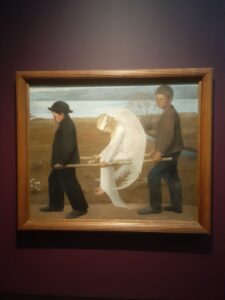 All in all, these bony figures have occupied the upstairs galleries of the Ateneum quite thoroughly. Death appears alongside other grim personifications: disease is shown skiing beside it, and in one painting, hunger takes on a corporeal form. Suffering and death gripped society so tightly that even an angel was wounded.
Western orientalism inspired many to travel east, though not all pilgrimages required literal journeys. Golden Age artists sought the sacred in their work, peeling back the dark veil of the Middle Ages. Around the turn of the 19th and 20th centuries, exhibition-goers glimpsed the strange and unknown trembling in the eerie glow of doors barely ajar, with death gripping the knocker.
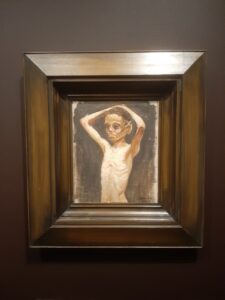
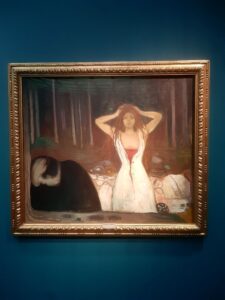 Suffering and demise came into full bloom in both Norway and Finland, as tuberculosis claimed the lives of Edvard Munch’s relatives and diphtheria took the life of Akseli Gallen-Kallela’s young daughter, Impi Marjatta.
“Illness, madness, and death were the angels that surrounded my cradle, and they have followed me throughout my life,”
Munch said of his experiences.
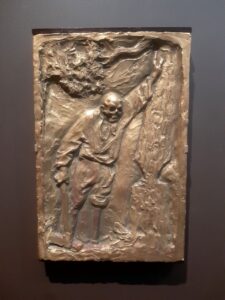
After the Great War, the German artist Käthe Kollwitz channeled not only her own grief over losing her son but also the collective pain of the European populace, mired in war, hunger, and poverty. The sacred, horror, death, and pilgrimages into the past—to departed Masters—also characterize Tuonen Portti (“Gate of the Netherworld”). Different timelines overlap naturally, and for us, the simple, deeply spiritual life of the past provides the ideal framework for making art. It is a setting in which one can still hear the voices of the ancients—those for whom nature was a source of mysterious powers.
 Even when war, disease, and famine kept their distance, heartbreak could still push a person to the brink. As noted, Munch painted these life-draining, vampiric women in his works. Ultimately, he survived, unlike so many other young men throughout history—a theme Goethe aptly portrayed in The Sorrows of Young Werther.
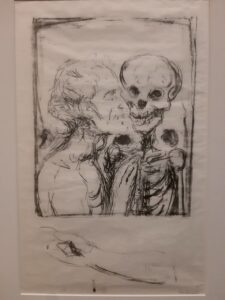 Alongside religious themes, one of the best-known motifs of the Middle Ages is the Danse Macabre, also referenced in Ingmar Bergman’s masterful film The Seventh Seal. In that film, there is also a scene inspired by church painter Albertus Pictor’s work, in which a chess game is played against Death.
Although in bygone days death was more visibly onstage, it was still wrapped in metaphor, and black humor helped people cross the threshold. Greater communal bonds also helped, whereas modern individuals often face loneliness. When meeting those hardened by suffering, one notices they share a single trait: a dark sense of humor. If anyone works in society’s hidden margins, that is precisely where such humor can be found most reliably.
Apocalyptic themes and dystopias shape today’s entertainment. Medieval people would recognize them straight away, both in their art and their daily lives. Some Golden Age artists lived long enough to witness the outbreak of the global conflagration in 1914. Today, we know how little terror it would take to send our infrastructure back to a medieval level. Perhaps one purpose of the Gothic Modern exhibition is to remind us of this—and of how to endure when faced with misfortune.
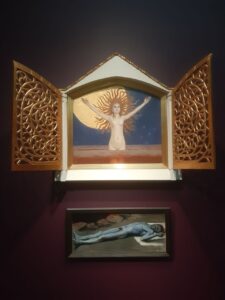 Creators and viewers alike see how similar fears have persisted from medieval times to the present day, and they find evidence of solace: destruction has never swept everyone away entirely. Even in the darkest moments, light and a new awakening have been discovered. As an artist collective, we encourage drawing on personal wounds to fuel creativity and thus find peace. We promise no utopia, nor do we claim suffering can be measured. Even so, it is already something if misfortunes do not strike all at once. Our era does little to foster growth, but fortunately it remains possible—among other avenues—by engaging with the art of the past.
Gothic, closely entwined with religion, makes Ateneum feel even more like a temple of art.
Go and see. The exhibition is open until January 26, 2025, in Helsinki, followed by showings in Oslo and Vienna.
Text: Carita Hännikäinen