
Love Your Fate
”One becomes human through adversities.” —Jussi K. Niemelä
Completely disregarding the secular society’s worship of youth, nature challenges illusions by teaching us to age and die. It should be noted that aging is not a disease in itself.
Now that autumn has begun, some of us experience this season as particularly connected to death, to which November’s name is a direct reference. Then the frosting earth dies to make way for winter. The extreme northern location, ultima thule, was for the ancients and Europeans thereafter as unknown and threatening as the state after death.
An Australian man once said to me with a chuckle that ”Finns can be forgiven a lot because of your climate.” I don’t know about forgiveness, but perhaps the admiration of sunny hot days has some connection to the worship of youth’s bloom? This delusion doesn’t withstand closer examination, because the Grim Reaper doesn’t vacation along with the rest of Finland. Day after day, death picks up people and animals of all ages. I’ll tell an example of the latter.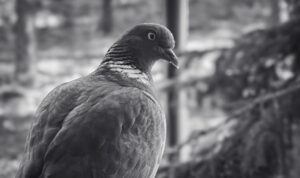
Last summer I found a starling chick that had fallen from its nest in the garden. The mother bustled around trying to feed it fat grubs and occasionally nudging it into motion by pecking. The sun blazed mercilessly and the chick fumbled around. Finally, I got gloves and carried it to a nearby moist thicket where the mother continued her care.
After a while, I saw the chick return under the scorching sun with the mother poking it into motion. Just then a violent thunderstorm began and lashed the chick to within an inch of its life. When the rain stopped, I saw it collapsed on the pavement, lifeless. It felt wrong to leave it there on the walkway, so I returned with my gloves to the small body.
I watched it for a moment as it rested in my hands, and just then it moved, perhaps from the warmth. Then it swallowed, stretched its wings into a comfortable position, and breathed its last breath. On the sidelines, the mother still waited with an insect meal in her beak. I placed the chick back in the thicket and plucked a garden plant leaf as an airy shroud so the bird mother could still say goodbye.
A few days later, when I peeked under the leaf, the heat and decomposers had done their work. The closer to nature one is, the more agreeable one’s own return to earth becomes.

In recent years, I’ve also observed balcony nesting and seen how many chicks die despite their parents’ diligent care. This year, a dove pair’s nesting failed completely when the eggs froze undeveloped. Was it the cold early summer or unfertilized eggs? An August moment stayed in my mind when, stepping onto the balcony, I heard the mother pecking open the eggs she had long incubated. Later we found some of them smashed on the floor. No one had answered the mother’s knocking.
Thunderstorms or heat waves easily become the acute cause of death for small birds. Then temperature regulation and energy levels fail within minutes. High chick mortality is normal, which is why starlings have multiple broods per season. The fact that there are many attempts and losses in the system is the expected value, not an exception. The same applies to human parents. Despite Arvo Ylppö’s life work, about 200 babies still die annually in Finland. In poor countries, the situation more closely resembles bird families’ fates.
The problem of suffering in nature is not solved, but scale helps: death functions as a balancer of food webs and population dynamics – meaning arises in relationship, not in individual fate.
While the cult of eternal youth denies death, nature restores realism from time to time. This fact has not prevented people from seeking victory over death. Sometimes you see bird baths as garden ornaments. They easily bring to mind stories of searching for the fountain of youth.

The phenomenon is universal and dates to the age of exploration. Spanish explorer Juan Ponce de León is said to have searched for such a fountain in Florida in 1513. Later, his compatriot Antonio de Herrera y Tordesillas claimed the spring would restore an aging man to the days of his young manhood. This brings to mind headlines from years past about Finnish pop stars and others who moved to Florida’s warmth for their retirement days.
If the waters of mythical springs fascinate, you can find one closer to home – namely in Iisalmi, in the village of Runni. The aesthetic-vitalist artists of the 1930s were inspired by it. The spring’s miraculous effects were recognized as early as the 18th century, which created lively spa life in the area. Research revealed that the reddish clay disclosed the water’s high iron content, which is said to have invigorated contemporaries. Perhaps it was indeed needed due to the common people’s iron-poor diet.
Fears are often advised to be overcome by confronting them. Probably one can also become accustomed to death if one sees it as a process. If fate has not yet brought us to its threshold, brief hospice care for wild animals like I performed can be useful.
The little bird’s departure was even communal: in addition to the dying one, there was also the caring mother and myself, mostly in the observer’s role. Although my actions were minimal, they took on ritualistic forms as I put on gloves, moved the chick to shade, and finally placed a leaf as a small shroud. Thus an ordinary gesture was sanctified into ritual, as befits the end of life.
Because mental images may be more frightening than the reality that befalls us, concrete encounters with death in nature reduce death anxiety much better than theoretical contemplation. The question is not only about mortality, but about accepting our entire fate.
Sometimes it’s useful to draw from the experience of cultures older than ours. I recommend a Buddhist lens for these views. For them, anicca reminds us of life’s constant change, which makes it temporary. Accepting this fact is the key to eliminating suffering.
For some, talk of fate brings to mind submissive passivity, which sounds quite depressing – perhaps even to those who don’t like autumn. Frost, dormancy, and November belong to it, but on the other hand, it’s also a time of vigorous activity, which you can see by browsing the diverse course and cultural offerings.
Death should not stop the movement of the living. Often staying in place means death. We remember from war films the mortally wounded soldiers who ask to be left behind so the rest of the unit can escape and survive.
 Ukrainian Vitali Skakun went further on the first day of Russia’s war of aggression. He voluntarily mined the Henichesk bridge and didn’t retreat when time ran out, but stayed to carry out the detonation manually. This slowed the advance of Russian tanks, and Ukrainians had time to organize better defensive lines. At the extreme, even in death, one can perform great deeds.
This brings to mind amor fati. What does it mean? Like the example soldier: not love of death, but love of life. The enthusiastic mind of one who loves their fate lives actively and wanders curiously through life’s diverse landscape, wanting to see it through to the end. The peace of mind arising from accepting fate carries one there often through even the stormiest phases.
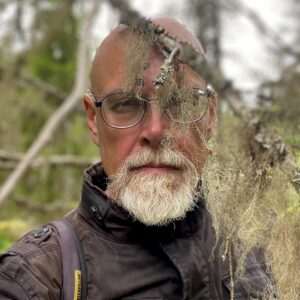
Jussi K. Niemelä, whom I quoted at the beginning, considers himself a peripatetic thinker. It’s easy to agree with that philosophical technology. Often the most elevated thoughts and conversations arise precisely in connection with nature, while walking there.
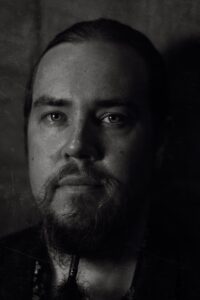 Publisher Jon Hällström published his travel book The Elevation of Nature a couple of years ago, which tells of Hermann Hesse’s, Richard Wagner’s, and Friedrich Nietzsche’s wanderings to European power places.
At their best, even mundane nature observations are refined into philosophies:
”There are places in nature where, with delightful confusion, we rediscover ourselves; it is nature as the sweetest double being.”
—Friedrich Nietzsche
Sometimes maintaining balance is challenging, not only in life’s own shoals, but because of external pressures. As mentioned in Hällström’s book, we may stray from our own path, for example, to the lovely temple of the religion of compassion. In this sense, outsiderness protects us, and we can strive to live apart from our own time’s commotion. Abandoning worldly goals by simplifying life is very cathartic and clears space for cultivating the spirit.
In addition to The Elevation of Nature, I recommend getting acquainted with the nature writings of Paavo Haavikko and Pentti Linkola.
Humans are said to be one of the animals when it suits them, but are we ready to place ourselves on the same mortality line as, say, birds? How do our lives resemble each other?
The dove can be seen as a symbol of spirit and transition. Nesting failure is normal in nature. We live in a country with low infant mortality, but life’s other projects may still fail. Allegorically, one could say that not all projects hatch.
At best, losing control helps accept limitations without becoming cynical. Setbacks can lead to success if we continue despite setbacks. Similarly, our refined spirit may eventually face a good death – our own and others’.
Finally, a warm recommendation to enjoy nature in all seasons! Wandering there teaches death literacy: not as cynical abandonment, but as a combination of compassion and limited agency. It is both ecologically realistic and existentially sustaining.