OP-Ed: Call Of The Daimon
Tomi Antila

It is fascinating to consider how collective thought structures shape our lives. In his work Life at the Bottom, Theodor Dalrymple describes how being underclass is not merely an economic condition, but also a self-perpetuating mental model—a socioeconomic belief system that binds people to their fate in the same way as traditional beliefs or myths. One could say this represents a shadowy manifestation of the Anima Mundi that feeds upon itself.
While the elite certainly nourishes this system by benefiting from the underclass’s existence, I believe it is most sustained by certain mantra-like incantations, specialized slang, envy, and linguistic games—the underclass’s own word-magic that simultaneously maintains their identity while justifying their refusal to try or fulfill their potential.
History, however, offers inspiring examples of individuals who have broken free from these chains. Karl Ove Knausgård, who rose from modest beginnings to become one of Scandinavian literature’s greatest names, stands as living proof. Similarly, James Ellroy transformed from a street-wandering narcotics addict who stole women’s underwear into one of the planet’s highest-earning authors.
Vladimir Nabokov wrote that neither environment nor heredity could explain why he became what he became:
”Neither in environment nor in heredity can I find the exact instrument that fashioned me, the anonymous roller that passed upon my life a certain intricate watermark whose unique design becomes visible when the lamp of art is made to shine through life’s foolscap.”
Some people seem to possess, despite their background and inheritance, an ”inoculation” against underclass mentality—a powerful spark that compels them to strive regardless of their starting point and fulfill their life’s mission. Plato conceived the soul as tripartite: the rational part (nous), the spirited and courageous part (thymos), and the appetitive part (epithymia). Perhaps in some individuals, nous and thymos dominate their inner order in a way that grants them greater power and ”nobility” of soul: the ability to discipline their desires and direct themselves toward higher goals. Such individuals can rise above their circumstances.
 James Hillman’s brilliant work The Soul’s Code presents the ”acorn theory”—the idea that within each of us lies hidden potential, just as an entire oak tree sleeps within an acorn. I personally believe that while some contain a modest birch, others harbor a mighty oak—but a tree nonetheless. From one emerges a successful author after years of drug abuse; from another, a child of addicted parents grows into an important addiction counselor or professional.
 Patrick Harpur’s Daimonic Reality encourages readers to step boldly, gently, powerfully, and with a twinkle in their eye into daimonic reality—a reality where individual life intertwines with mythic forces, archetypal figures, and one’s personal daimon, an inner guide or spirit. This is an invisible fabric where coincidences, symbols, and encounters take on guiding significance, potentially opening paths to both perdition and glory.
The individual must dare to begin their own mythic and heroic journey through initiation or self-initiation. Fear of failure likely terrifies people, but the hero dares to choose destruction if the journey began with good intentions. But how can we know where to begin our heroic journey? How do we find the player of the kantele?
People’s harsh fates, underclass existence, soullessness, and general degradation stem from many factors, but I would argue that it results significantly from the breaking of Western wisdom traditions. Indeed, this can be seen as the root cause of mass humanity’s degraded state.
Since the Enlightenment, humanism, and scientism replaced traditional belief systems (with Christianity’s assistance, whose New Testament spirit emphasized turning the other cheek and passive humility, often meaning submission and self-diminishment), they covered over daimonic reality. Loss of meaning, collapse of traditional consciousness, and the destruction of wisdom institutions have been allowed to rot the foundations of our existence. Gnosis no longer passes from sage or shaman to another and from there to citizens. The golden chain has broken, as alchemists would put it.
What remains are yellow press’ ”experts” and health, war, and life-skill specialists who appeal to ”science,” always knowing better on others’ Facebook walls which vaccine to take, how to win wars, and what everyone should eat.
The benefits produced by science and enlightenment are undeniable, but what good is extended lifespan, equality, or abundant material wealth if one spends life on numbing work, mass entertainment, and meaninglessness, never breaking free from the collective mental prison?
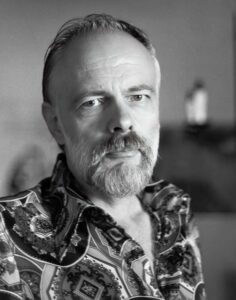 Philip K. Dick’s ”Black Iron Prison” offers a fitting metaphor. According to Dick, we inhabit a prison whose walls are invisible, composed of mental, linguistic, and cultural structures. The prison exists simultaneously outside and within us, making its chains the most difficult to escape.
Meaninglessness among Western underclasses has grown so vast that our weakness-worshipping age has created, alongside underclass identity, diagnostic identity—a group that builds their entire self-image around chronic illnesses like rheumatism, diabetes, manic depression, or life-limiting autoimmune diseases, thus justifying their remaining on life’s receiving end, in the black iron prison, from which escape is a tricky task without proper spiritual guidance.
Ultimately, the question isn’t just about society but whether we ourselves can transcend our own shadow. Collective mental prisons are real, but even more real is the possibility of breaking free from them. This requires courage to listen to one’s own daimon, see the soul’s structures, and choose the mythic journey rather than surrendering to passive consumerism.
It still demands responsibility from all of us to offer help, share knowledge—to bear light. Everyone who dares to begin can demonstrate that the black iron prison’s metal is not unbreakable, but only as strong as one believes it to be.