

Fanatic
What kind of person does the word ”fanatic” bring to mind, or should I ask whom? Does the word have a negative ring to it?
Someone might hear at this point the voice of a raging speaker inciting the people, the stomping of boots on the street, or a war cry praising God before an ear-splitting explosion. No wonder, both are constantly referenced in both mainstream and alternative media.
I was still a child when I first heard about fanaticism. As a visual person, I immediately saw a cloudy sky, with a cool wind tousling my hair at the same time. Much later I learned about kamikaze flights and recognized the caresses of divine wind on a child’s face.
The touch of the sacred brings to mind religious scholar Mircea Eliade’s distinctions between the sacred and the profane. For a spiritual person, the connection to the sacred provides true meaning, and even a secularized person cannot completely free themselves from religiosity, even if they worship mammon. Eliade’s dichotomy has manifested so universally in religious rituals that it can be considered universal.
The English word ”fanatic” (from Latin fanum), from which our own ”fanaatikko” is derived, originally meant something quite different from how it is now conceived. The word referred to a temple, a separate space consecrated to divinity. A person inspired by God who served in the sanctuary could therefore be considered a fanatic.
Later, the pre-Christian worshiper of God began to sound threatening. The sacred became pathological. When the temple lost its authority, the divinely inspired person appeared irrational rather than holy.
What semantic path did the possessed take to become a mad zealot?
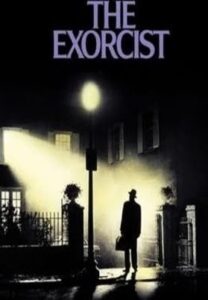 The Greek daimon brings to mind a demon, which a dualist easily considers the cause of possession. Something like what is presented in the film The Exorcist. In ancient times, the meaning was the opposite—rather a guardian spirit or spirit guide. Temple servants were thought to speak on behalf of God, which led to the word beginning to refer to possession from a divine source.
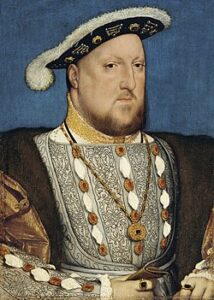 The interpretation became harsher in 16th-century England. The Tudors were then at the helm, and it was the time of politically motivated reformation. King Henry VIII, who had previously ardently defended the Catholic faith, only changed course to obtain a divorce from his first wife. This succeeded only when Henry was appointed head of the Church of England in 1531. The breach was sealed by the Act of Supremacy, which separated the Anglican Church from the Catholic Church. This naturally aroused criticism, which was experienced as hate speech of that time, and the previously God-possessed person was condemned as mentally ill.
The course of the Reformation continued erratically during the reigns of Henry’s successors. Theology was focused on more than before, influenced by Jean Calvin. This brought no peace, but first Catholics were persecuted, and when a Catholic queen ascended the throne, Protestants became the target of persecution.
The writings of Puritan preacher John Foxe defended the reformers, emphasizing martyrs like William Tyndale and John Wycliffe, who was condemned as a heretic. This long fueled English anti-Catholicism. ”Fanatic” began to mean furious and riotous; from the 1530s to the 1640s, it was used to describe sectarians deemed too religiously eager. The original neutral meaning became derogatory almost immediately after the reformation began. It became a political branding iron, whose blows were felt by Quakers, Fifth Monarchy supporters, and other radicals who disturbed the peace of the congregation. The polemics of the English Civil War and the later Age of Enlightenment transformed madness into a civic danger that required restraint.
Does this sound familiar in today’s political mud-slinging and defamation cases that go through all court levels? The word ”fanatic” still stains its target’s name indelibly, and years of hanging in the loose rope of criminal law cannot pale beside the sanctions of the past.
In addition to violent extremism, our time’s fanatics include harmless technology or fitness fans. Thus marketing and media expand the questionable term from political to intensive but socially accepted hobbies. Behind this is industrial America’s mass leisure time, which shaped excessive passion into a harmless outlet through baseball fanaticism. Throughout all ages, changes in politics, theology, and mass culture have shaped the emotional charge of the word and the behavior it signifies. Thus the new epithet framed passion from a sacred privilege to, at its extreme, a societal threat, with context determining the term’s moral value.
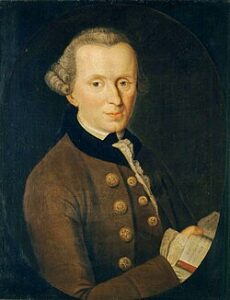 Enlightenment philosophers justified creative enthusiasm but weeded out dangerous fanaticism from it. Immanuel Kant classified visions of direct divine contact as Schwärmerei, or fanaticism, which was a delusion and thus in conflict with rational faith. The word’s durability lies precisely in this tension: it allows authority to define where passionate commitment ends and destructive obsession begins.
There is no true artist without passion. In this context, what late Finnish journalist and musician Perttu Häkkinen said about obsessions comes to mind:
”Amateurs have fixations, professionals have obsessions. So cultivate your fixations so that they might in time be elevated to obsessions. There is power in obsessions.”
 What began as a sacred calling received the stamp of irrational rage and became a weapon in religious-political conflicts down to our days. Winston Churchill, distinguished as an aphorist, characterized a fanatic as ”a person who cannot change their mind and will not change the subject.” He himself changed parties twice, finally returning to his conservative political home.
The pathologization of expression and demonization of fanatics still belongs to the speeches of political commentators. As always, the politicization of society threatens freedom of expression, even though works channeled from creativity cannot be suppressed. This happens easily if resources are distributed according to prevailing political and commercial views.
If the true fanatic of the ancient temple was connected to God, what kind of threat was he? Can a secularized administration understand motives other than those aligned with their own? Do they project their own lust for power onto the artist?
We observe that each semantic turn has reflected broader cultural tensions—the church rose against the temple, to extinguish reason’s passion for God and the creative flame of ideological violence. Similarly, fanatic zeal for political ideologies has been burningly fervent among those who consider their own regime the only correct one.
 What was fanaticism like in 1940s Japan? Let us return for a moment to the kamikaze flights mentioned at the beginning. What made young men steer their planes toward enemy ships? The Japanese national character differs significantly from the Western one, so one must be careful in one’s reflections.
Shinto belief influenced the war-waging people through the emperor cult, which included a sacrificial spirit toward the divinely-descended ruler and the fatherland. Additionally, the Buddhist approach to the cycle of life was apt to reduce the fear of death. The ritualized death blow could be seen as a religious ceremony and the pilot’s life as its sacrificial gift. The soul permeated by transcendence was believed to be sanctified as a kami, which could be placed in a shrine dedicated to them in Tokyo.
In connection with the Japanese, one should not forget the samurai’s life guidance, or bushidō. They did not idealize suicide as such, but it offered a means of atonement after shameful failure. The kamikaze strike became an honorable death in Japan’s hopeless situation in 1944. Thinking of our theme, it is notable that the flights were undertaken mainly voluntarily. As a curiosity, it should be mentioned that a remarkably large portion of Japan’s kamikaze pilots were Christian.
And where did the kamikaze get their name? In the 13th century, Japan was threatened by a different kind of fleet, namely the Mongols. Then natural forces came to the rescue, which were named kamikaze storms. The terrible intervention was experienced as supernatural, which is why it was called divine wind.
Whatever one thinks of those pilots, their choice brought them closer to the original meaning of fanatic in temple service.
Häkkinen’s mentioned elevation brings to mind sublimation. The concept belongs to the realm of psychoanalysis. Sigmund Freud thought that forbidden drives were discharged through mental work in a socially acceptable way. In culture and art, it was at its noblest. Art as a substitute for drive satisfaction was not enough for his colleague Carl Jung, who saw the schematic nature of Freud’s interpretations. According to him, true sublimation meant self-knowledge, self-realization, and spiritual growth. In that psychological process, primitive material changes into gold, like in alchemy.
All nations have pursued gold fervently. It has caused rulers to plunder monasteries and withhold grants from artists. The tools have sometimes been words mightier than the sword. Banishment to the margins has not been able to break the divine bond that is the lifeline of the true worshiper and artist. At the end of this reflection, I still find it difficult to say who is a fanatic. Why do I think so?
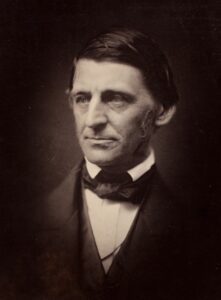 A person devoted to art or God always inevitably sacrifices something from their life. For some, it may be renouncing the world by entering a monastery, or for another, neglecting such mundane things as family life when swept away by daemonic inspiration. This led Ralph Waldo Emerson to state that ”art is a jealous mistress.”
Because fanaticism is so extreme and an integral part of artistry, it can be difficult for ordinary people to tolerate it.
The common person should therefore remember the following words of Joel Lehtonen:
”Art is not morality, nor the ideas and demands of the moment: otherwise it would not be eternal.”