On Monsters
Earlier, I dared to write about fear. Why was it daring? Those who’ve read the text know I didn’t inherently understand the emotion. I was the unusual child who wasn’t afraid of the dark. Being enclosed in darkness felt more like a peaceful embrace than a frightening punishment.
Some cultures have traditionally sent young individuals into the wilderness, leaving them to survive on their own. These rites of passage often relate to survival, spiritual growth, and acceptance into the community. Aboriginal boys in Australia wandered for months following the Dreamtime ancestors’ paths. Similarly, Native American youths were sent alone into the wilderness without food or shelter for several days, contributing to the reception of visions guiding their societal roles. Certainly, children cast among monsters have experienced something similar, though not always favorably. Friedrich Nietzsche, who lost his father early, famously wrote in Twilight of the Idols:
”What doesn’t kill me makes me stronger.”
Reaching extreme limits pushes them even further away.
Later in life, I also found myself alone, forced to fend for myself without familial protection. Paradoxically, this happened amidst a bustling city environment. For the same reason, an abandoned elderly person might mummify unnoticed in their own home. It’s hard to imagine the suffering of their fading life beforehand. What pains did their flesh feel, and did their delirious visions offer a desired escape from the reality of the welfare state? A child silently praying to be taken into foster care might wonder the same.
Someone always has it worse, and eventually, death arbitrarily claims people of all ages.
Tuonen Portti has studied suffering, and our understanding of trauma has expanded through interviews conducted for our podcast. Notably, Erik Andersson and Kyle Rasmussen stand out. This has been therapeutic for us, and hopefully, the shared knowledge benefits others like us. We welcome further thoughts and feedback.
 Jesus once spoke in parables to reach his listeners. Similarly, we frequently employ analogies to clarify matters. Here, Midian comes to mind—a land and tribe known from the Books of Moses and beyond biblical texts. In esoteric traditions, Midian symbolizes spiritual exile and transformation. Unsurprisingly, Moses fled Egypt to Midian, living there for forty years. Afterwards, a transformation occurred when God appeared in a burning bush, sending Moses to free the Israelites from Egyptian slavery.
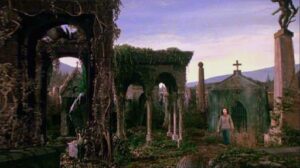
 The theme has also permeated horror fiction. Clive Barker’s film Nightbreed, based on his novel Cabal, depicts Midian as an underground sanctuary beneath a cemetery, a refuge for monstrous beings rejected by human society. Similarly, our Port has become a home for monsters.
What comes to mind when you hear the word ”monster”? Does a horror film creature appear, or something indescribably present? In Tuonen Portti’s early days, we diligently explored Master Jung’s thoughts. One late evening, reading his memoirs, I realized I should investigate the meaning of ”monster.” Etymology is fascinating, even addictive, revealing the roots of concepts. This explanation struck me like an esoteric slap in the face.
The monster archetype is deeply embedded in humanity’s collective consciousness, extending beyond literary mythology. Historical contexts and esoteric interpretations must also be considered. The monster’s liminality makes it a guide from mundane consensus reality into unknown realms—the shadow and the numinous, as groundbreakingly portrayed in Barker’s Midian.
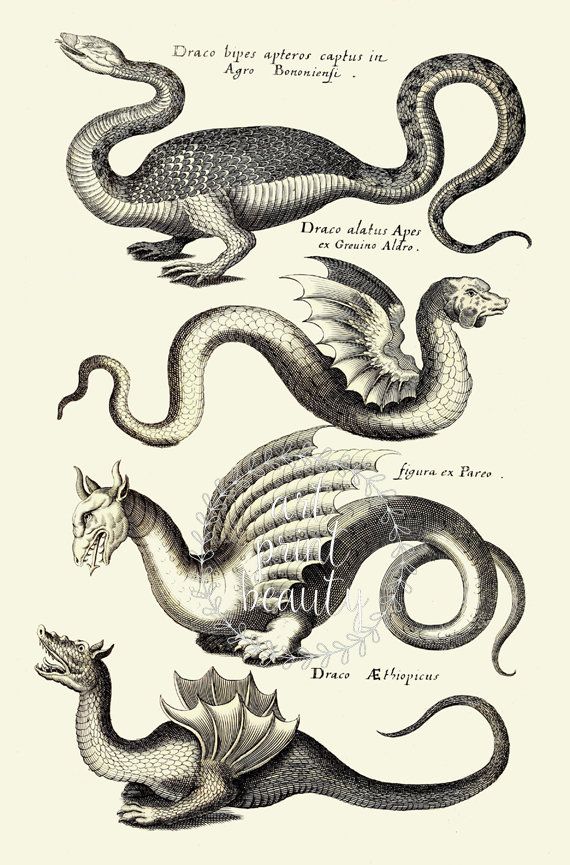
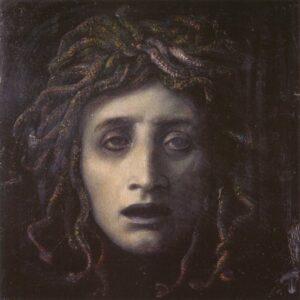 Returning to etymology, ”monster” originates from the Latin monstrum, meaning ”omen,” ”warning,” or ”portent,” emphasizing its connection to prophecy and deviations from the natural order. Historically, monsters appeared as signals of divine displeasure or cosmic imbalance, reflected in miraculous births, monstrous animals, and natural disasters. Symbolically, they encapsulated societal anxiety and fear of chaos. Prominent historical examples include Greece’s Minotaur and Medusa. Allegories of divine tests and punishment continued through medieval bestiaries, such as familiar dragons. Societal concerns and cultural transgressions will remain humanity’s afflictions, ensuring the persistence of monsters among us.
As medicine progressed, monsters were scrutinized empirically yet persisted as biological anomalies. Esoterically, their domain has always been liminal, gatekeepers to other dimensions. Carl Jung viewed monsters as humanity’s shadow, repressed aspects of individual and collective psyches. These monstrous forces captivate occultists, who recognize consciousness’s wild frontiers as vital for personal growth.
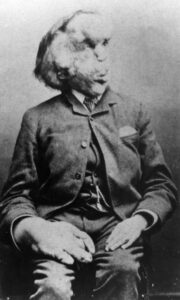 David Lynch, who passed away in January, incorporated disturbing anomalies into his narratives, unveiling hidden darkness beneath the sunny facade of 1950s American idealism. If you haven’t seen his Victorian-era film The Elephant Man, I recommend it. Its protagonist, exploited as a freak show attraction due to deformities and presumed mental deficiencies, leaves lingering doubt—can a figure branded as a monster ever escape their stigma, even when exploiters become societal benefactors?
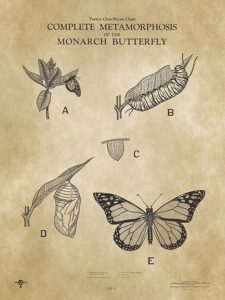 These beings face intensified hardships without hope for true metamorphosis. The term evokes butterflies’ perfect transformations, though even this doesn’t always succeed. Usually, butterflies emerge after enzymes weaken their chrysalis, splitting it open under body pressure. No one assists; their wings remain fragile and crumpled initially. A delicate, decisive phase, unique to their lifecycle, never repeats. Transferring fluids into wings enables flight; within hours, wings expand and harden, granting independent flight. This birth process metaphorically highlights struggle as essential for strength and transformation.
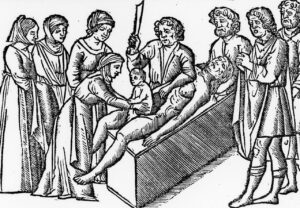 In Jungian psychology, birth parallels caesarean sections, emphasizing struggle’s impact on physical and psychological development. A natural birth through the narrow birth canal stimulates lung function and prepares infants for independent breathing. Caesarean births deprive infants of this initial struggle and victory, potentially affecting neurological activation and sensory processing later. Passage through the birth canal exposes babies to essential microbes programming their immune systems. Without this exposure, risks increase for allergies, asthma, and autoimmune diseases due to impoverished microbiomes.
Jungian psychology views birth as the archetypal first struggle. A passive entry into the world deprives individuals of their initial initiation experience, potentially fostering subconscious dependence, awaiting external intervention rather than confronting challenges personally. This can manifest in stress management, impulse control, and self-regulation issues.
Research indicates correlations between caesarean births and increased ADHD and autism risks, possibly stemming from microbiome differences, immune system development variations, or sensory experiences.
Considering birth as an archetypal ritual, Jungian psychology identifies initiation rites as crucial for transformation, marking profound subconscious impressions. Thus, a child isn’t a blank slate.
This information raises questions about individuals born in this way and consequently achieving trauma-awareness—those whose art is dark, operating in shadowy margins, finding homes in darkness.
Oscar Wilde once remarked,
”The only people I’d like to be with now are artists and those who have suffered: those who know what beauty is, and those who know sorrow; nobody else interests me.”
This resonates deeply at Tuonen Portti. Life spent otherwise is wasted, even contemptuous.
Fyodor Dostoevsky poetically stated,
”The darker the night, the brighter the stars; the deeper the grief, the closer to God.”
For Orthodox believers and occultists, God may appear differently, yet we remain connected to Otherworldly Numinousness. I dare claim that the more monstrous and alienated someone is, the closer they are to Sacred Mystery within this life. As artists, we’ve verified André Gide’s words, which appeared early to us at Tuonen Portti:
”Art is a collaboration between God and the artist; the less the artist does, the better.”