
Guest Column
Ignem veni mittere
Kristian Palmi
”In the lingering light of the primal fires
Through the din of all centuries past
A call to see, to learn, to know
So that fearless we may go
Beneath, beyond, behind, below”
Watain – The Howling
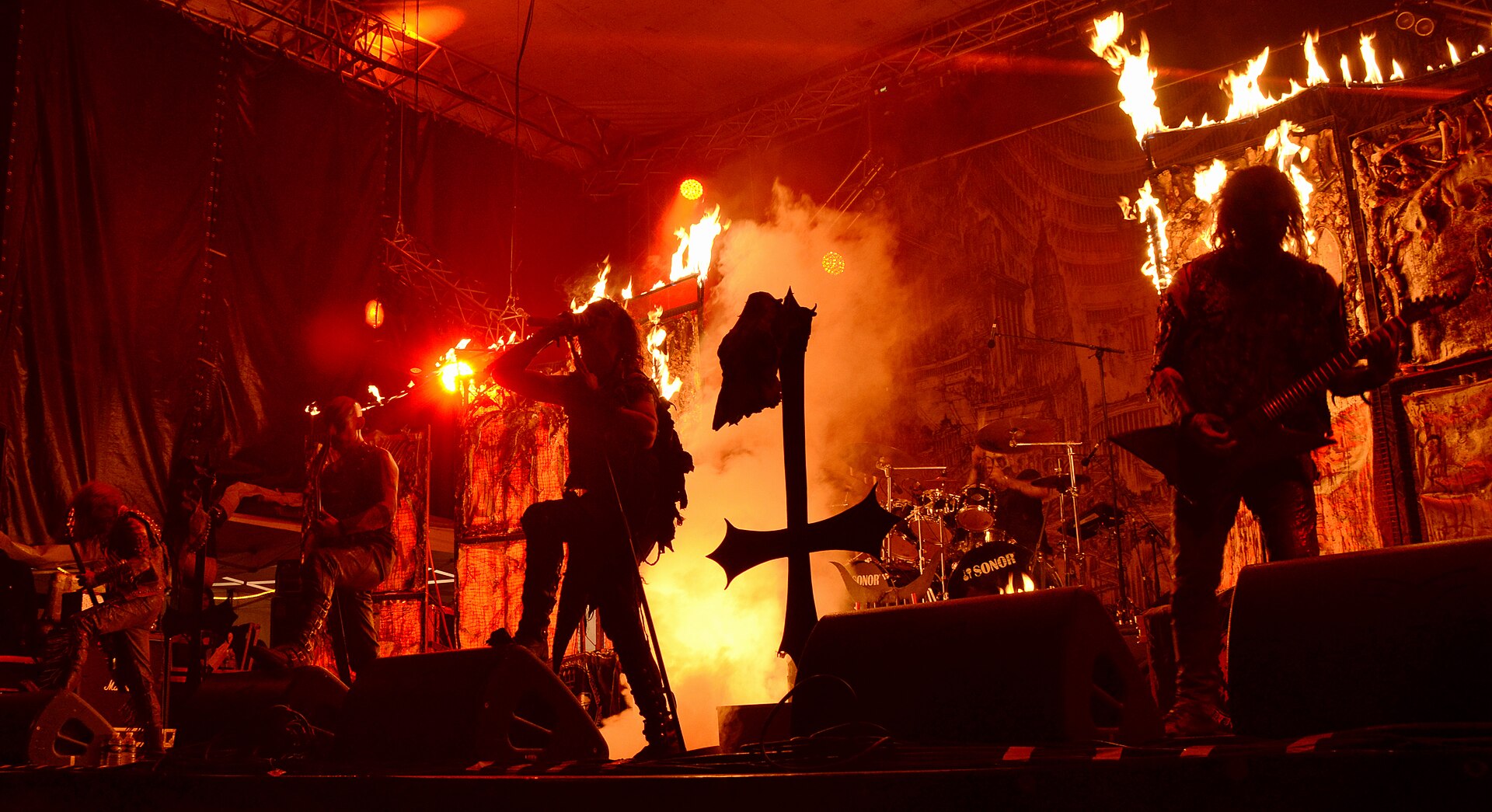
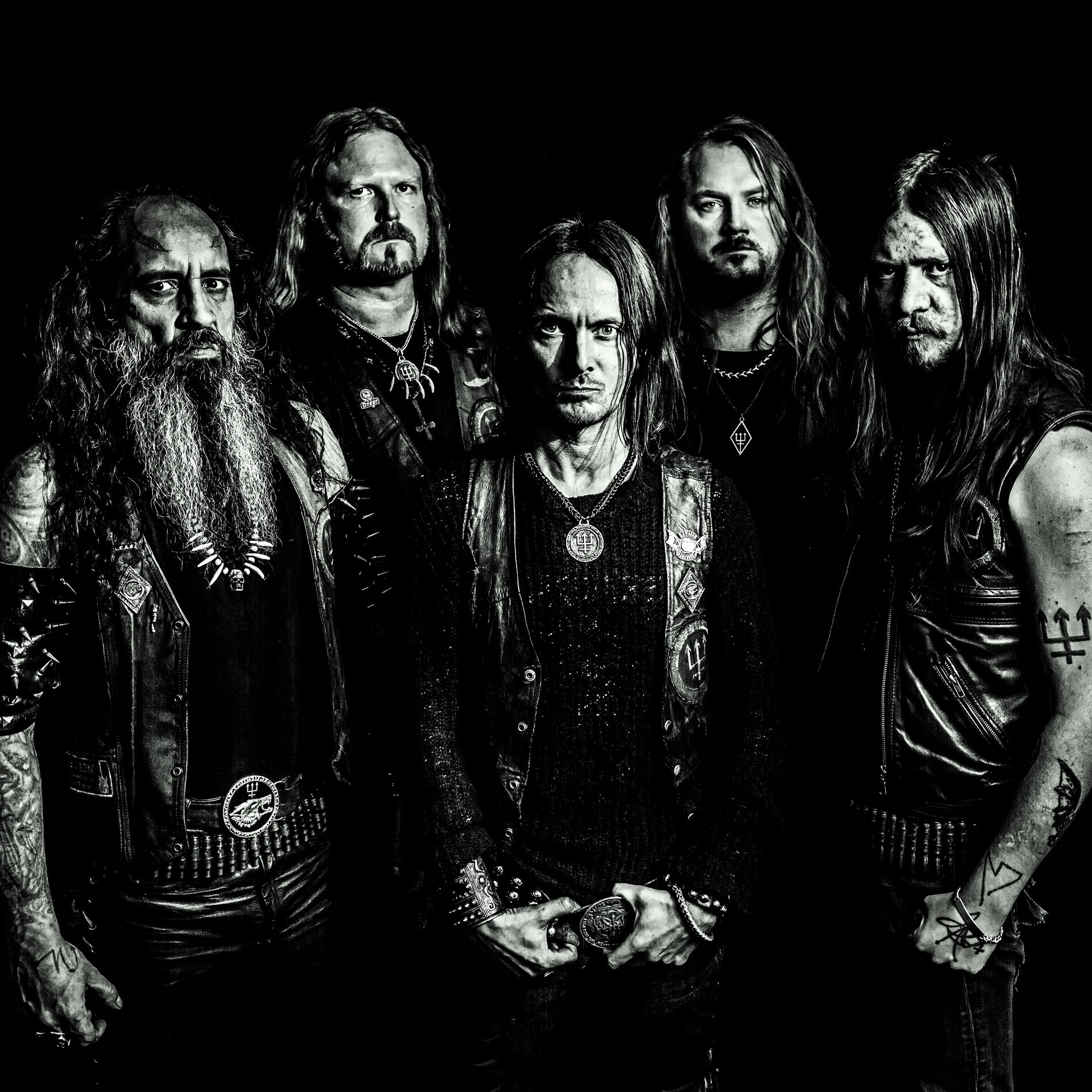
Watain came to me on the threshold of thirty, at the age of the Saturn return, which symbolises leaving youth behind, finding one’s own true path and stepping into one’s task. Watain gave both form and spirit to that which acts in this reality but lives outside it. Watain was something real, dangerous and sacred. The music held blood, fire and death. They felt like primal elements: symbols of life, destruction, will and the sacred. The music was not rebellion, not posturing nihilism, nor mere aesthetic blasphemy. It was something beyond these: an interface between the sacred and the unclean, the bodily and the metaphysical, the animal and the divine. Personally, Watain acted as a call, a compulsion, toward initiation and seeking. At the same time it forced me to consider, on an archetypal level, the individuals capable of acting as mediators, as vessels, of such a force. It could not have been a matter of choice. Over the past year this reflection has become collective work, and it has also led to the writing of this text. For me, Watain’s significance in defining the archetype has above all been catalytic. Watain gave voice, form and ritual intensity to the experience. Where much heavy music ultimately remains at the level of aggression, aesthetics or identity, Watain opened a channel toward something real.
I · Sacrifice and the Law
Nothing truly meaningful comes without sacrifice. Faust’s initiation, too, demanded a sacrifice: his soul. Faust exemplifies the inner possession that drives toward total experience, the transgression of limits, a hunger that cannot be satisfied. The insurmountable compulsion to pursue this total experience also makes the Faustian soul antinomian. In Christian theology, antinomianism has denoted the view that a Christian saved by grace is not bound by the religious moral law in the same way as a person under the law. The term derives from Greek, in which anti refers to opposition and nomos to law. Detached from its Christian context, the concept can describe a broader phenomenon in which law, morality and various norms are not regarded as binding. They are seen as structures of power to which there is no obligation to commit, or to which commitment would be senseless. Antinomianism, however, is something that takes place within the structures of reality, and as such it cannot by itself serve as the description or the name of the archetype under discussion here. As if by chance, Watain has a song called Outlaw. The English word goes back to the Old Norse útlagi, meaning roughly one placed outside the law. In Old Norse and Anglo-Saxon practice, to declare someone útlagi was to place that person outside the protection of the law: the legal order that protected the other members of the community no longer protected him.
”Transform! Aspire!
By the fire of will and the will of the fire
Nuclear Alchemy Pyromaniac witchcraft!”
Watain – Nuclear Alchemy
II · The Outlaw Archetype
In this text I use the term Outlaw to describe an archetype that places itself outside the normative order not merely out of rebellion, transgression or ideological opposition, but because its consecration is to something deeper than order. In different traditions this may be, for example, a divine calling, a non-human force, gnosis, the void or a metaphysical necessity. To suppress it would mean spiritual suffocation. It would nevertheless be wrong to claim that the Outlaw is some kind of tradition or doctrine. The shaman, the aghori, the qalandar and the gnostic occupy the same borderland in different languages and systems. They do not necessarily share a doctrine, a morality or a goal, but their function is similar. Although the Outlaw is antinomian, the two do not correspond in substance.
The Outlaw uses antinomianism as a method, but antinomianism does not exhaustively define the archetype. Antinomianism always depends on what it opposes and can therefore easily regress into self-serving, childish rebellion. The Outlaw embodies a destructive inner force that gnaws at identity, structures of meaning and internalised norms. This is not incidental. The archetype’s destructiveness is closer to the dissolving function of the alchemical solve phase than to ordinary violence: destruction in the service of a deeper ontological commitment, even if to outside eyes the two may look inseparable. Alchemical transformation is, in a certain sense, at the centre of the birth of archetypal existence. Violent dissolution also explains why some paths are cut short. I describe this alchemical process as a fire that destroys form, with no guarantee that anything lasting will arise in its place. Fire is a tool, but it also has a will of its own. Herein lies the archetype’s ontological danger to the individual. This is a process of extreme individuation.
III · Western Dualism
In the West, such an archetype is easily experienced as existentially dangerous to the society around it, whereas in India, for example, this kind of existence has its own sacred place. I would venture that one key reason for this is the pronounced dualism of Western thought and being. There is good and there is evil, and all too easily the phenomena of the so-called left-hand path, for instance, are branded evil or at least suspect. The history of the left-hand and right-hand paths has its roots in tantra; Western esotericism has certainly reshaped these paths for its own purposes, but in tantra they are not treated dualistically. It is hardly a coincidence that the archetype discussed in this text manifests among us in extreme phenomena such as black metal. Western society has neither room nor demand for it, so the space must be cleared and set apart from the surrounding reality. The contrast is stark: Varanasi and the aghoris. Nietzsche’s remark that ”God is dead, and we have killed him” may partly explain why this is so. Watain’s vocalist Erik Danielsson has said in the documentary Music, Blood and Spirit:
Erik Danielsson, Music, Blood and Spirit
IV · Catalyst
Although I refer to Watain a great deal in this text, its purpose is not to reduce the archetype to the band or its members. As I said at the outset, Watain acted for me as a catalyst both for reflecting on this phenomenon and for a personal search. The real purpose of the text is to try to put into words what seems to be at stake, and to provoke discussion about why such an existence, in other cultures even commonplace (at the level of culture), seems to be entirely absent among us. Even when it does manifest, it is often disruptive, tearing and explosive. Perhaps there is no other way.
”What if we lived our life to the fullest extent?
Free unto ourselves
Unbound by law
What if we were to walk
Like pilgrims on a sacred path?”
Watain – Septentrion