
”Kintsugi – Traces of Time” Exhibition at the Lobby Gallery of the Craft Museum of Finland in Jyväskylä, September 28–November 24, 2024
(Note: Click images to enlargen them)
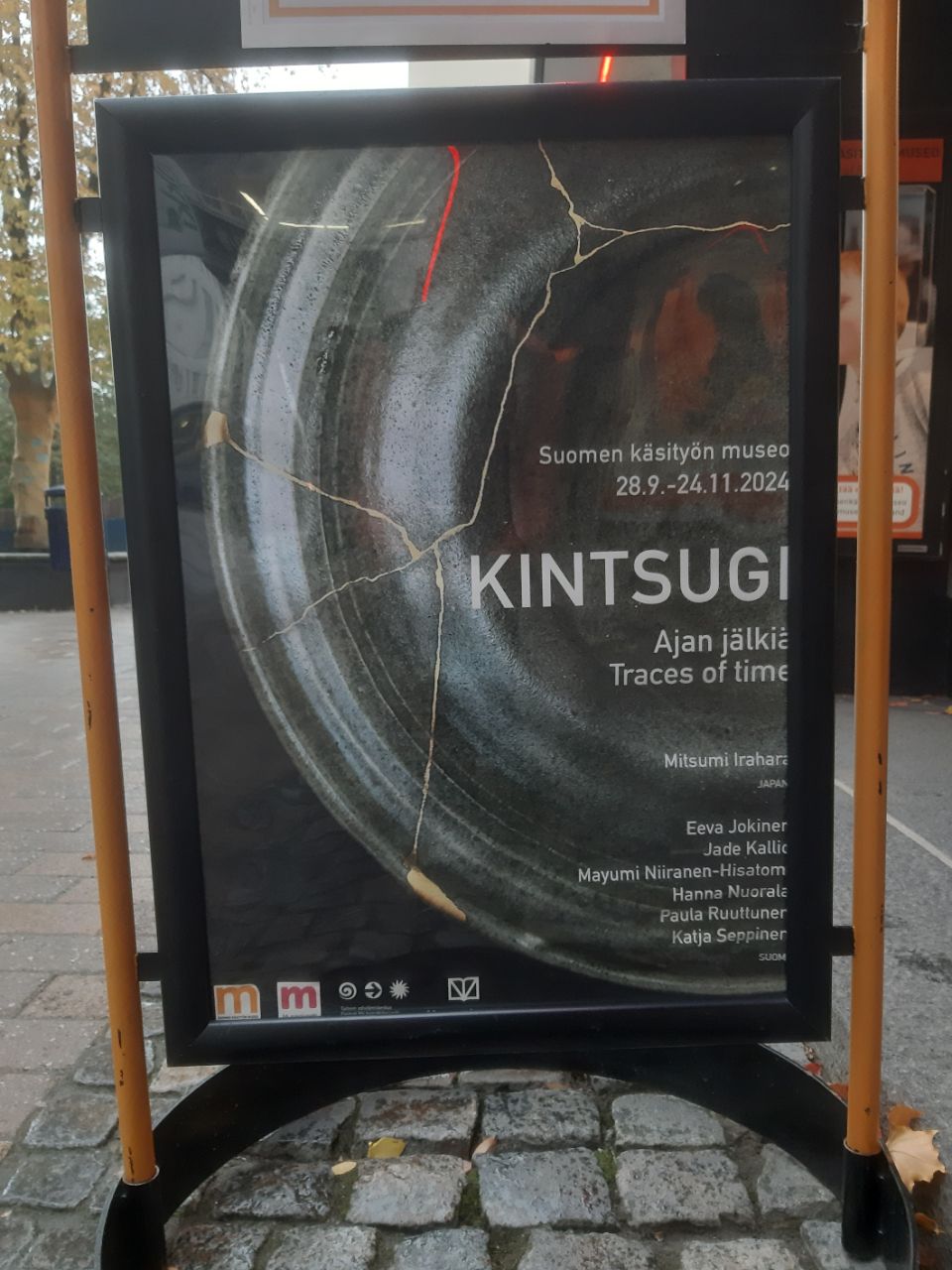
What exactly is Kintsugi (金継ぎ) or Kintsukuroi (金繕い)? Kintsugi can be translated as ”golden joinery” or ”golden repair,” which means reassembling broken ceramic vessels using a mixture of lacquer and gold.
It’s a form of Japanese art that, beyond skilled craftsmanship, encompasses both the sacred and the profane use of the pieces.
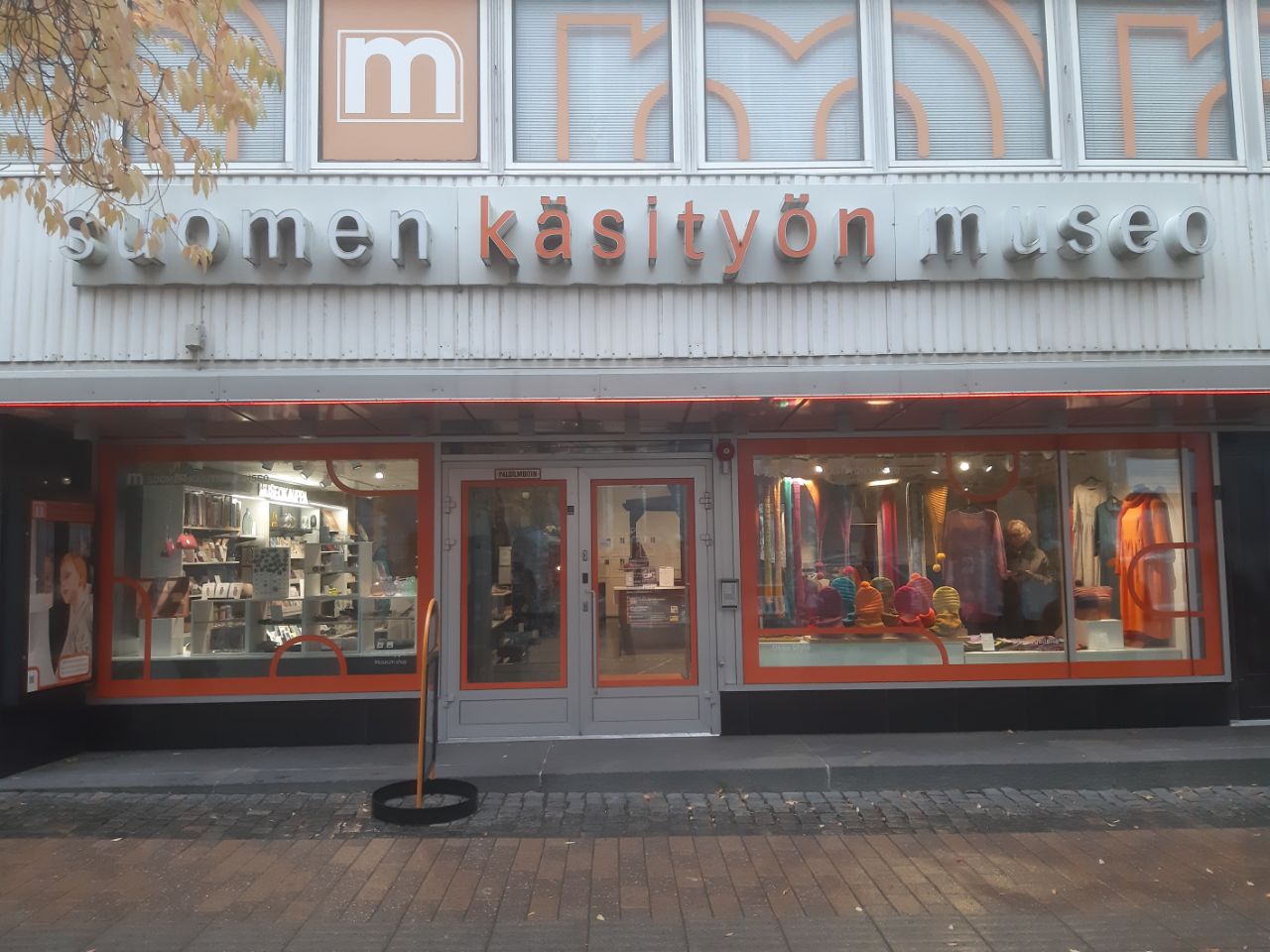
Underlying it is a philosophy built from various fragments of Japanese culture. One such concept is Wabi-sabi (侘寂), which embraces the traces that living leaves in our homes and reminds us of the impermanence of everything.
The days of mortals are like grass;
they flourish like a flower of the field;
when the wind passes over it, it is gone,
and its place knows it no more.”
—Psalm 103:15-16
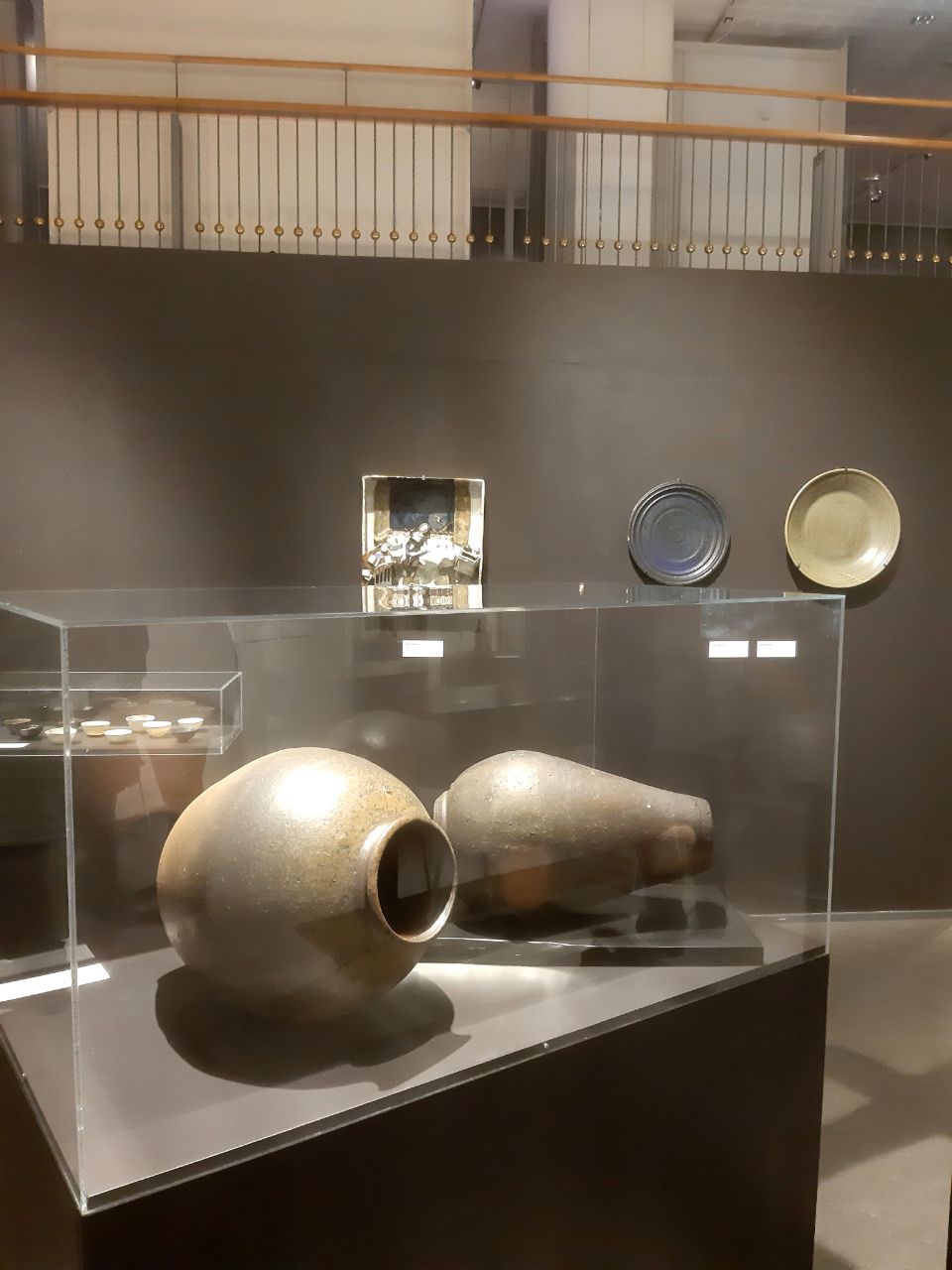 In Japanese aesthetics, the cracks and fractures of a human made from dust are a cause for praise. A resilient person bends and understands that something can become more valuable and beautiful after being damaged.
Such a person realizes that life is constant movement and letting go. Accepting the flow of change prevents one from becoming rigidly fixated on the past.
It’s about continuous metamorphosis, as our personal histories carve ever-new fissures into us, which, as they heal, embroider a unique story onto our skin.
Fortunately, Kintsugi has also inspired Western artists and led to a therapeutic understanding of identity, rather than the current identity politics. Not in the sense that you’re fine just as an undeveloped caterpillar, but as a butterfly whose wing is tattered from the storms of the world.
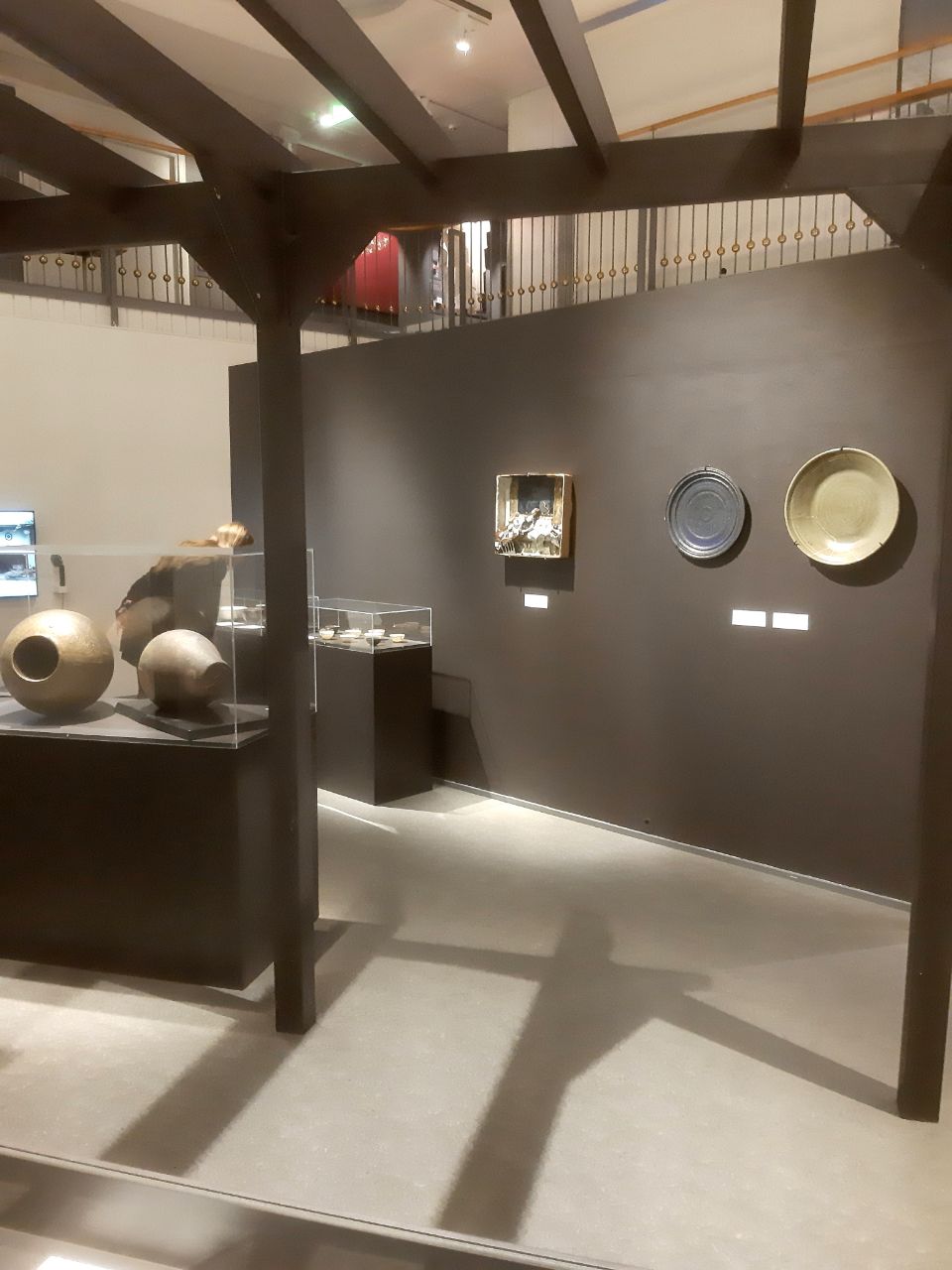 Finding beauty in the imperfect brings to mind Junichiro Tanizaki’s classic book ”In Praise of Shadows,” which delves deep into the dim corners of Japanese culture and discovers the beauty of a vanishing world there. What kind of beauty? At least the delicate glow of a worn outhouse wall and a tarnished silver bowl.
One of the masters raised by the Tuonen Portti is the late Perttu Häkkinen. In this context, his sincere appreciation for artists like Tauski and Turkka comes to mind—figures easy to mock, but Häkkinen reached deeper into the darkness of the psychic dungeon and saw in them something that others overlook. And never from a place of superiority, but acknowledging his own flawed side as well.
It seems that one thing unites us creators of black art. We’ve discussed this theme on the Rihmastosignaali podcast with Erik Andersson and Kyle Rasmussen.
With each passing day, I feel more and more as though I’m not made for the human world. But in the shed, I feel like I belong. Perhaps this is why these liminal spaces where the wild and urban worlds overlap speak to me. I find magic in the shed with the trash and filth and the cobwebs because that’s what’s there for me to have and cherish. Honoring the tragic beauty in the wound that is the shed helps me to hold sacred and accept my own wounds.
— Artist Tiera May
This is reflected in the themes of black art. We do not hide our scars but have refined our suffering into traumagnosis, which is a healing balm for those like us. The black sludge of occultism mentioned by Freud has sealed us—a precious gold that holds us together.
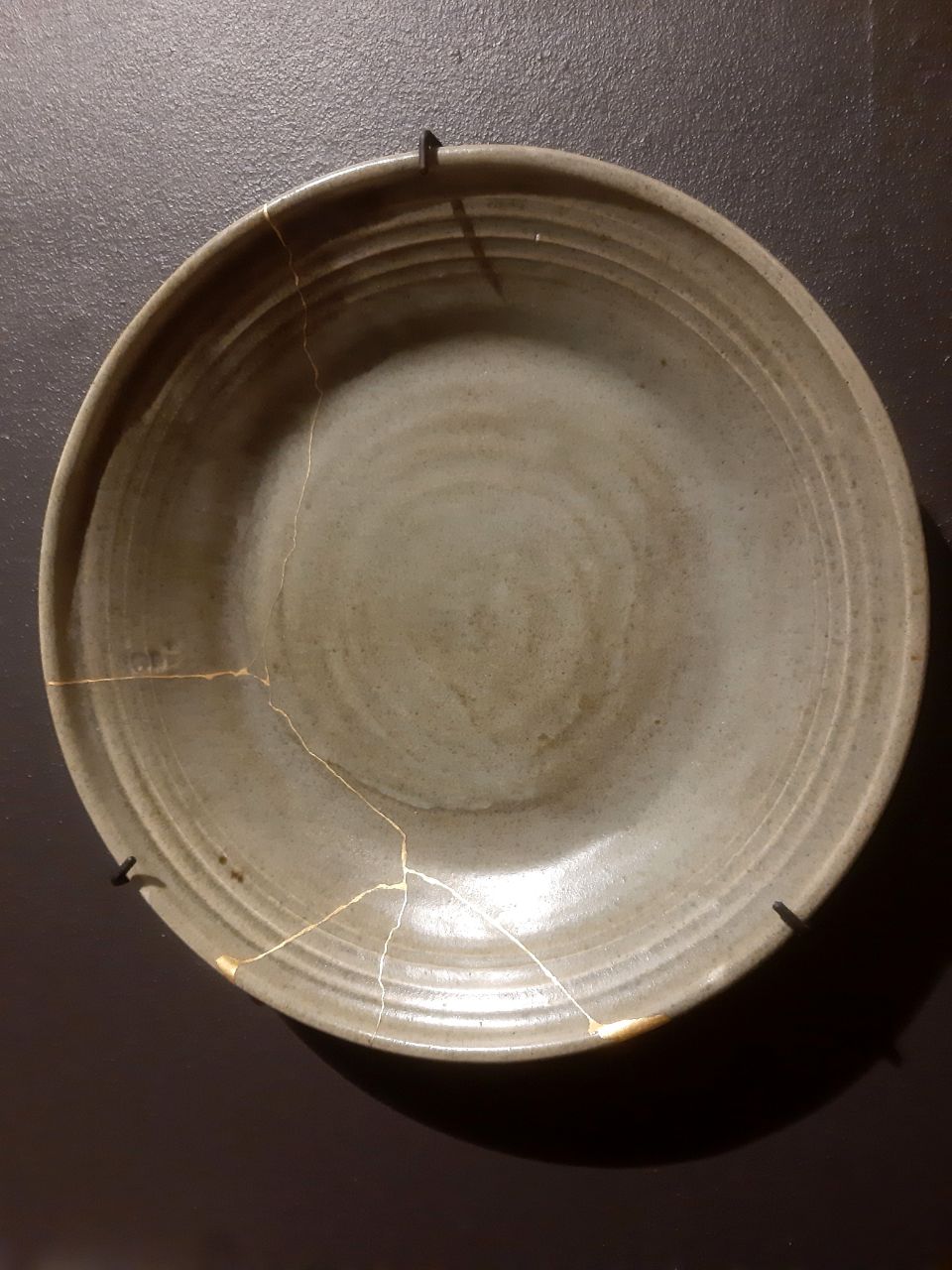 Tanizaki also interestingly contemplates the taste differences between Eastern and Western people in his book. Easterners seem to be content regardless of their environment. They strive to accept things as they are. For them, something inevitable doesn’t cause dissatisfaction. I smile as I read the book because the phrase ”it is what it is” is constantly heard from the lips of those in our own tribe.
Next, thoughts from Mitsumi Irahara, a Kintsugi master from Tokyo and the guest artist of this exhibition.
When I repair a broken vessel, I give it new life with urushi. Immersing myself in the repair process, I lose track of time. For me, the value of the Kintsugi experience lies in the slowness required by natural lacquer. The joy of urushi is in its laborious process.
Since the ancient Jomon period, people have used urushi to make sacred objects and offerings to the gods. How exquisite these objects must have been; so much love and soul went into their creation. Immersing myself in the Kintsugi process, I sometimes feel the urushi god guiding me. Handling urushi and creating ’with an empty mind’ help cleanse my spirit. In my work, urushi is an irreplaceable material and at the same time my innermost comfort.
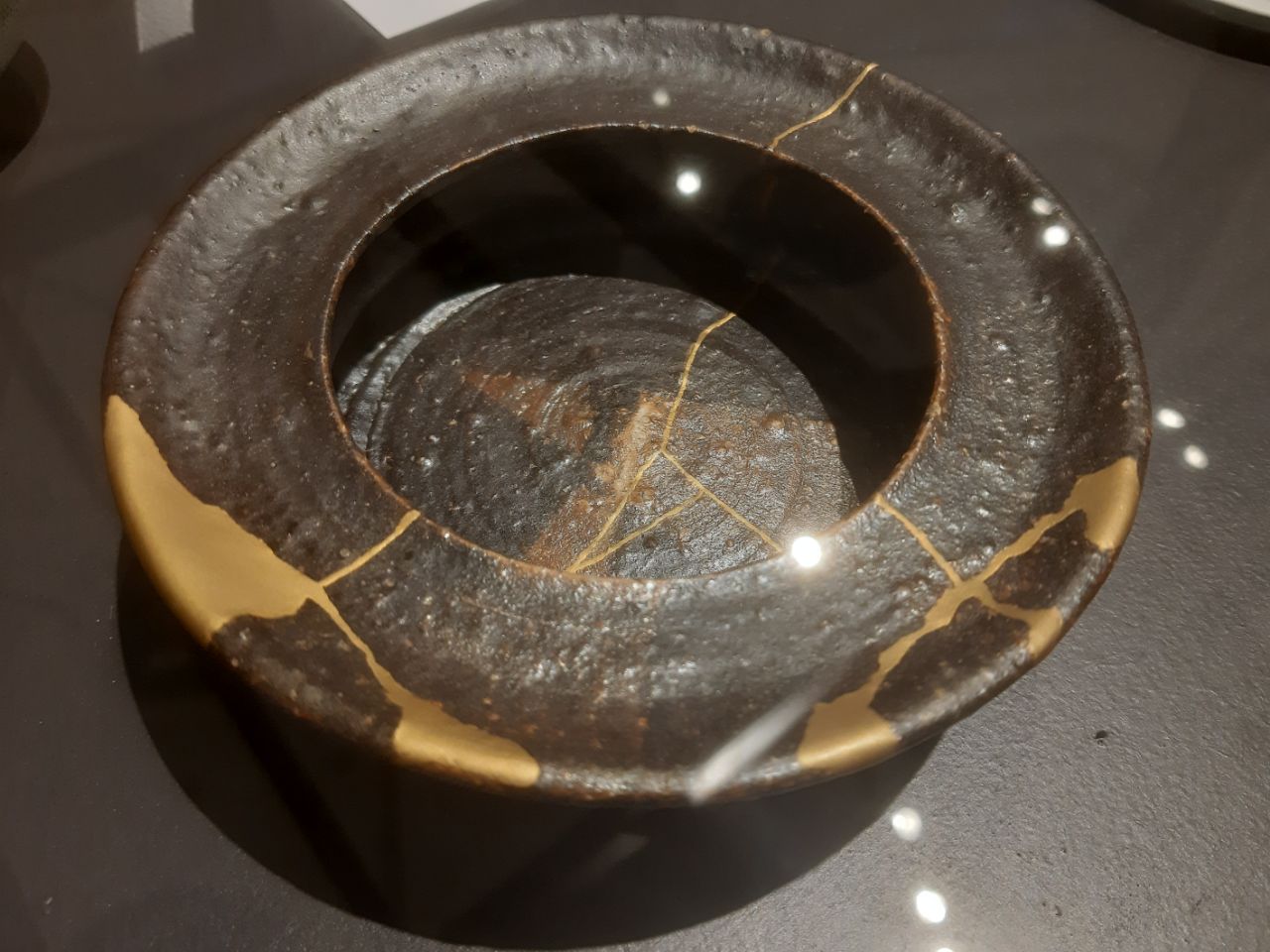
This alternative perspective on restoration opposes the Western worship of flawless youth.
Beyond aesthetics, it’s also an ethical question. The visibility of time’s layers in our environment reminds us of our place in the continuum of history, as part of our own tribe. Lifecycle thinking is, of course, also important ecologically.
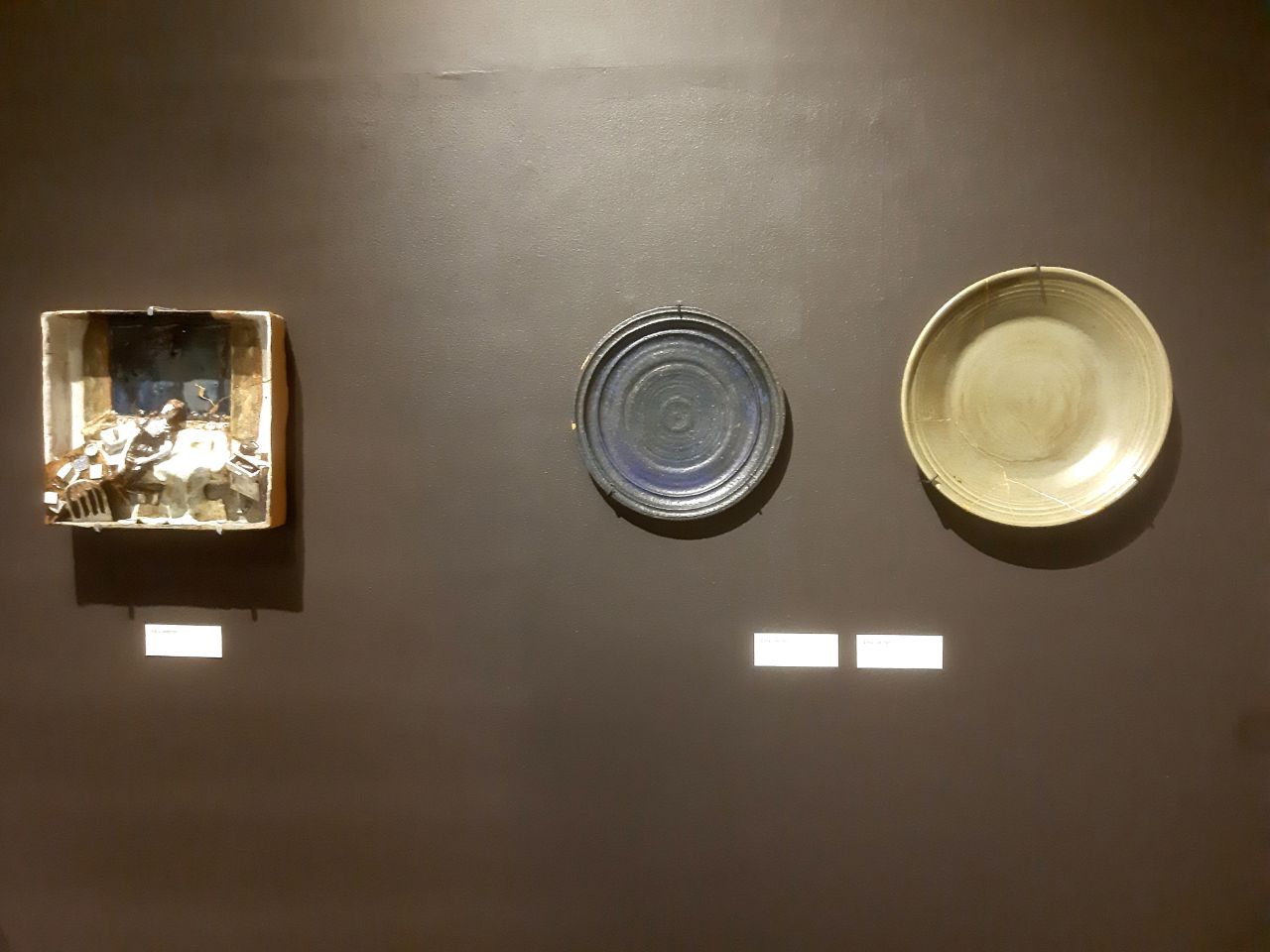 Like Freud, many others have recoiled from the so-called black sludge of occultism, as seen, for example, in the 1990s when black metal burst into the world’s consciousness. That’s why it’s amusing to read in the exhibition brochure that the urushi lacquer used in Kintsugi belongs to the same family as poison ivy! The text adds, however, that once it hardens, there’s no longer any health hazard, and the vessel becomes waterproof and usable.
Certain things, however, remain on the fringes, which is fitting especially for the Sacred, who are set apart. In Corinthians, it says:
But we have this treasure in jars of clay to show that this all-surpassing power is from God and not from us.”
—2 Corinthians 4:7
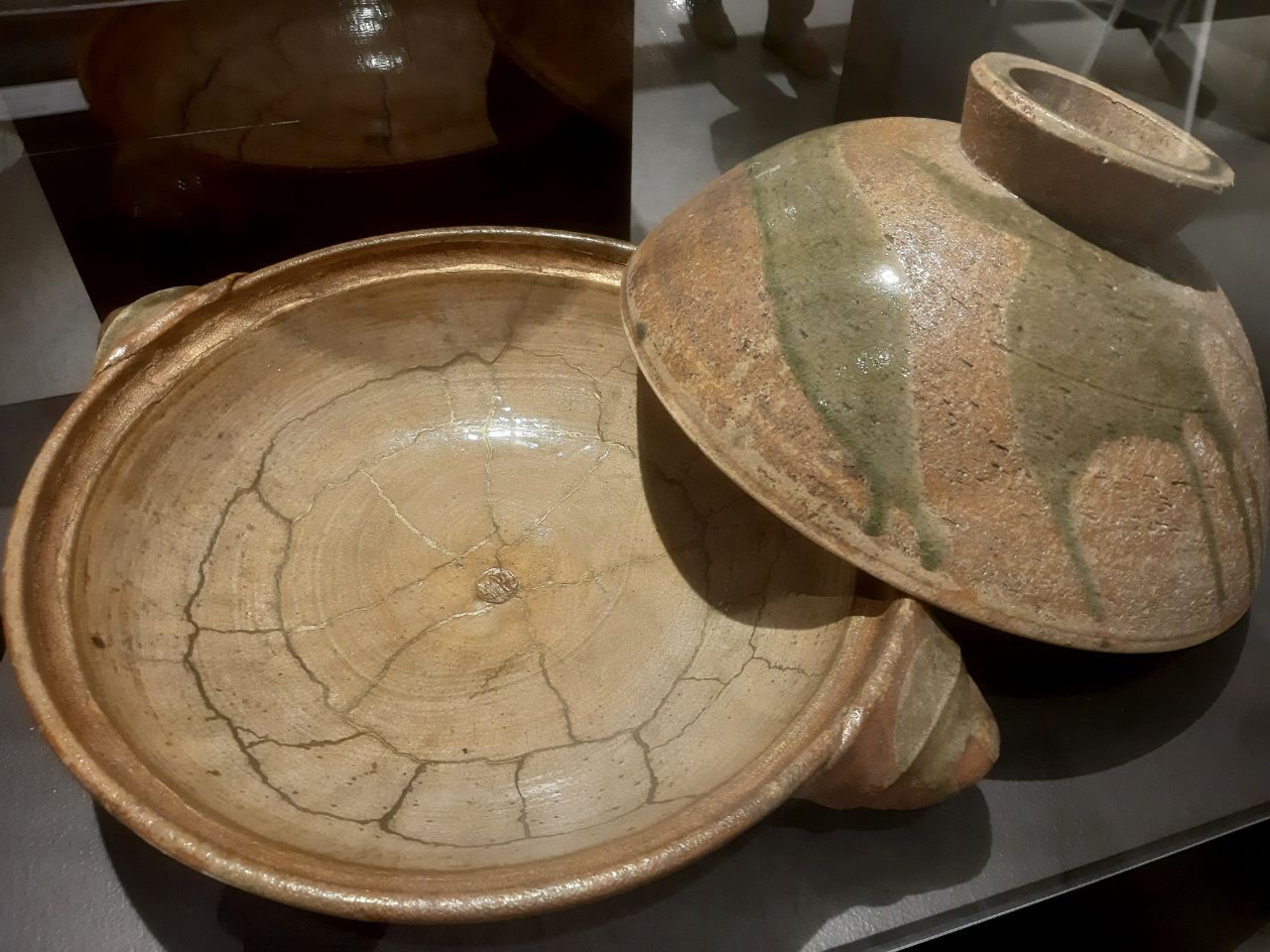 Let us thank the Source that has strengthened and adorned us to continue the Sacred work as artists. Thanks also for the abundance of clay vessels unearthed from the desert sands, now shining as a global mycelium with golden scars.
Text: Carita Hännikäinen