Podcast · 2024 Remastered
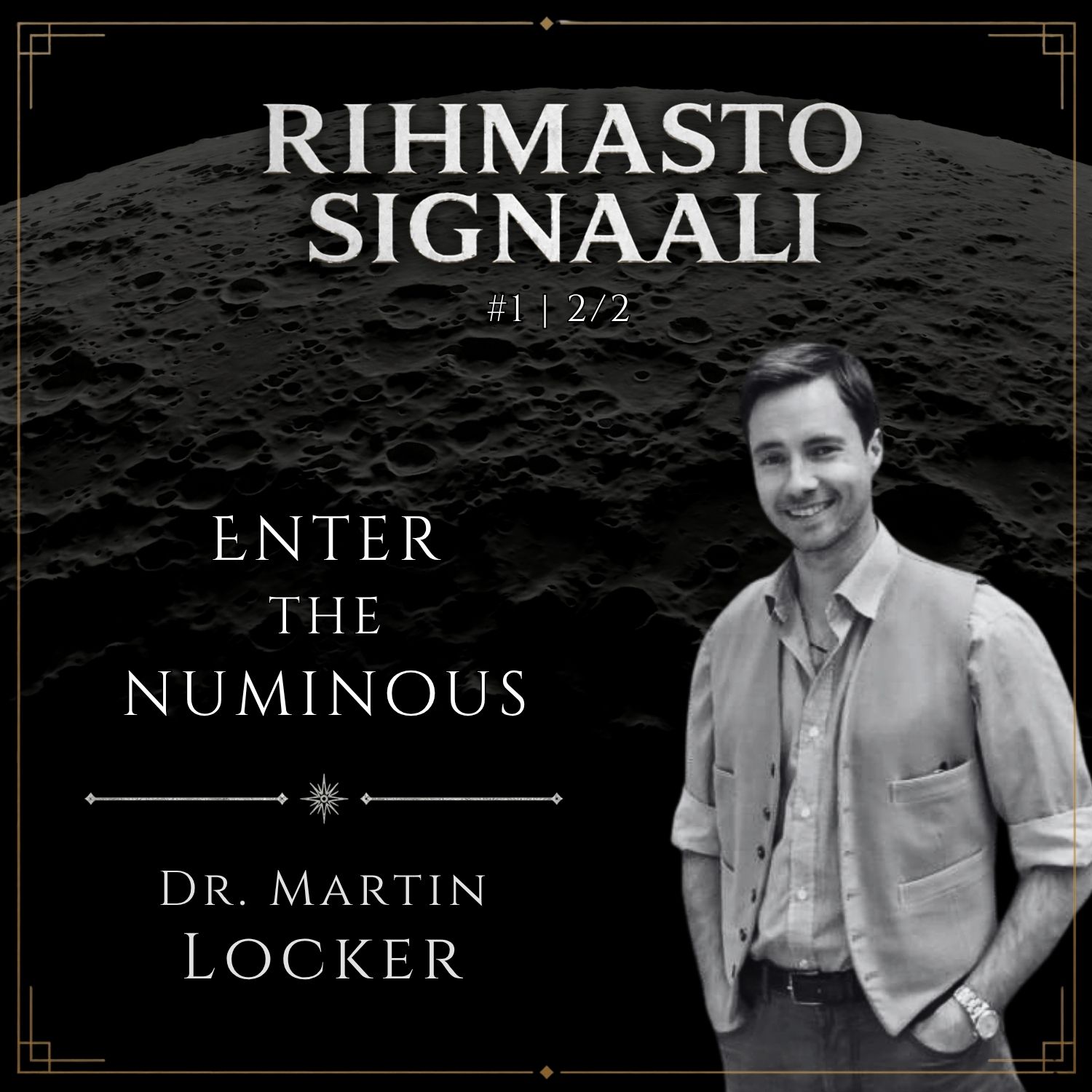
Mycelium Signal #1: Enter the Numinous
Dr. Martin Locker · Part 2 of 2
Episode Overview
Where Part 1 moved across landscape, material culture, and the archaeology of Pyrenean continuity, Part 2 enters different territory: the metaphysical grammar that underlies it. Locker and Tuonihovi work through the structure of sacred experience — genius loci, the daimon, the egregore, katabasis, and the numinous — tracing the architecture these concepts share and where they diverge. The conversation reaches its furthest point with the German Lebensphilosoph Ludwig Klages, whose critique of rationality as a force hostile to life and soul remains one of the most uncompromising philosophical positions in this territory.
This Is Part 2
Part 1 — Perennial Pyrenees covers Andorra’s history and folklore, the concept of tribe, and Locker’s ethnographic soundscape work.
Key Themes in This Episode
- Genius loci — the spirit of place as an operative rather than merely poetic concept
- The liminal: threshold states, their structural properties, and what passes through them
- Daimon and egregore distinguished: personal mediating intelligence versus collective thought-form
- The numinous (Rudolf Otto) and sacred horror: the encounter with the wholly other as the irreducible core of religious experience
- Katabasis: descent as a structural constant across traditions
- The etymology of ”ecstasy” (ek-stasis: standing outside oneself) and what this reveals about the phenomenology of altered states
- Sacred geometry and the non-linear experience of time
- Ludwig Klages and the Geist as adversary of the soul: the philosophical case against rationality as life’s antagonist
Ludwig Klages (1872–1956)
German philosopher, graphologist, and central figure of the Munich Cosmic Circle (Kosmiker). His principal work, Der Geist als Widersacher der Seele (”The Spirit as Adversary of the Soul,” 1929–32), argues that the intellect is not the seat of human wholeness but its enemy — a force that severs consciousness from the living, rhythmic substrate of existence. Klages’ concept of a primordial Pelasgian layer beneath European civilisation, and his critique of what he termed the ”Geistfeindschaft” (hostility of spirit to life), have made him a persistent reference point in esoteric and dark philosophy circles despite — or because of — his radical position outside academic respectability.
Attention
The conversation addresses sacred horror, ontologically provocative claims about the nature of place and consciousness, and philosophical positions that sit well outside consensus materialism.