NATURE’S OTHERNESS: Henry David Thoreau and the Crumbling Consensus Reality
Modern society rests on chronic day-consciousness, in which life shrinks into mechanical performance and an illusion of happiness. We are taught to accumulate luxuries that inflate the ego and dull the soul.
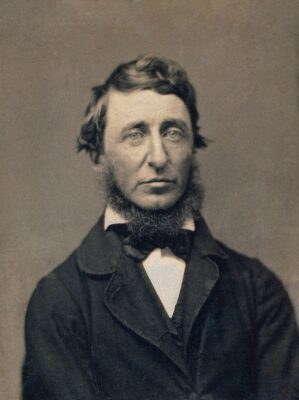
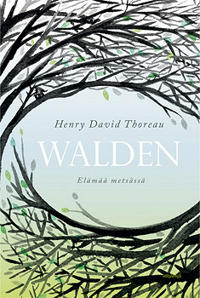
Read through the esoteric lens of Tuonen Portti, Henry David Thoreau’s classic of 1854, Walden; or, Life in the Woods, does not dilute into a mere nature essay or the account of a hermit of its day. It is a ritual withdrawal into a liminal state, a deliberate step outside consensus reality. The call of the daimon and the settling on the shore of Walden Pond marked, in Thoreau’s life, a radical process of paring down. He recognised early the same spiritual withering that we call postmodern decay. Thoreau wrote openly of an inner voice, the daimon, which he called his genius. What awaits is neither easy answers nor the approval of the community.
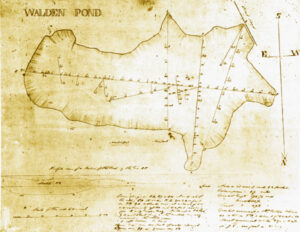 The daimon demands that we renounce the luxuries that stand in the way of humanity’s spiritual development. Those subtle bars from which the cage of our mind is built. The anaesthetics and buffers of the soul that prevent us from facing the raw primal source of existence. When materialism is stripped away, we meet our own demons. What is at stake is an experiment in which we see what remains when the self defined by society dies. Walden Pond is not merely external geography but a mirror to the dark regions of the mind. It is a passage into the realm of shadows and intuition:
A thousand regions in your mind
Yet undiscovered. Travel them, and be
Expert in home-cosmography.”
 The unexplored regions of the soul are not defects to be repaired but the nutrient-rich black earth in which mythic consciousness dwells. Only by agreeing to face one’s own darkness can one discover something truly independent.
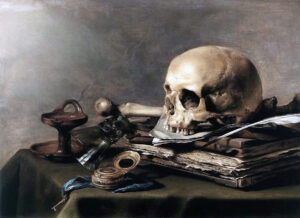
The less we consume materially, the less of our time we must spend acquiring it. The price of a thing is the amount of life that must be given in exchange for it. One must remember the unimpeachable truth: a shroud has no pockets. All worldly status crumbles in the end into earth. Pockets are the refuge of the ego, but death ends the play.
By refusing material luxury, Thoreau achieved something that consensus reality is unable to comprehend. The greatest achievements and values are not esteemed in society, because they are invisible to market forces. They are the highest reality, which cannot be sold or passed on to another as such. In Thoreau’s words, the true harvest of daily life is somewhat as intangible and indescribable as the tints of morning or evening.
 Walden is a call to awaken and a work set against time. It is an invocation: we must live deliberately and suck the raw marrow out of life before the physical end overtakes us. Let us not allow our weaknesses and our love of comfort to build the cage of our mind. Let us listen to the stern voice of the daimon and step through the gate into our unexplored soul-landscapes.